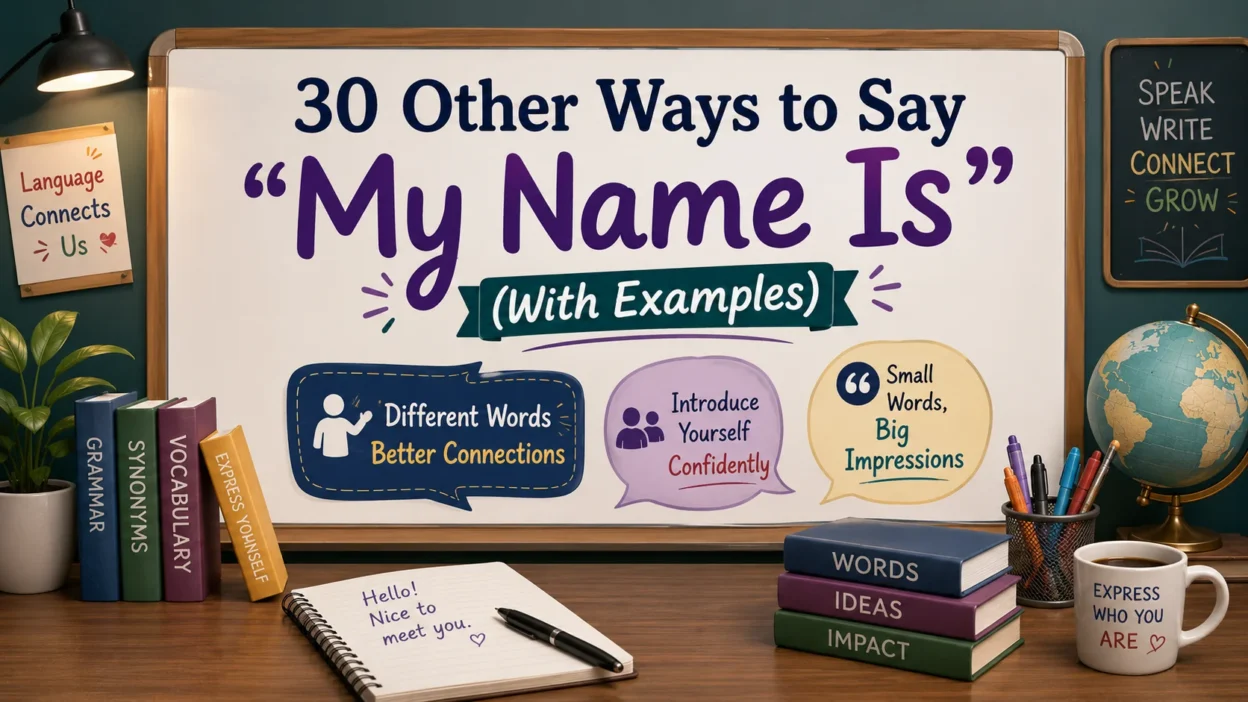
Other Ways to Say “My Name Is” can help you find the right words to introduce yourself and create a strong first impression in any conversation. Using different alternatives instead of the same phrase allows your introduction to feel more natural, friendly, and engaging. Whether you are meeting someone for the first time, joining a meeting, attending a networking event, or starting online communication, these expressions add a personal touch and help you sound more confident and authentic. The phrase “My Name Is” is common, polite, and straightforward, but choosing new ways to express yourself can make your communication more memorable.
Instead of repeating the same phrase in every situation, you can explore other ways to say My Name Is that match your personality, context, and purpose. A professional bio may require a more formal approach, while talking with new friends may work better with a casual or creative style. From my experience with writing and communication, a simple shift in phrasing can improve how people connect with you because the right tone, clarity, and confidence make your introduction stand out naturally.
Learning these alternative expressions can improve your English vocabulary, strengthen your communication skills, and give you more variety when you speak or write. Whether you want to sound more professional, creative, or relaxed, using practical examples, tips, and usage notes helps you create a meaningful introduction that reflects who you are and leaves a positive impression on others.
What Does “My Name Is” Mean?
“My name is” is a common phrase used to introduce yourself by sharing your name with someone. It is one of the most polite and straightforward ways to begin a conversation, whether you’re meeting someone for the first time or introducing yourself in a formal setting.
This expression is widely used in personal conversations, business meetings, job interviews, classrooms, emails, and public introductions. It creates a friendly, respectful, and professional first impression, making it suitable for both casual and formal communication.
Is It Professional/Polite to Say “My Name Is”?
Yes, “My name is” is both professional and polite when introducing yourself in business meetings, interviews, emails, presentations, and formal conversations. It is a clear and respectful way to begin an introduction, helping create a positive first impression while maintaining professionalism.
However, in casual conversations, people often use shorter alternatives like “I’m…” or “I’m called…” because they sound more natural and conversational. The best choice depends on the setting, audience, and level of formality.
Advantages and Disadvantages of Saying “My Name Is”
Advantages
- Polite and professional, making it suitable for formal introductions.
- Clear and easy to understand in both spoken and written communication.
- Creates a positive first impression in interviews, meetings, and business settings.
- Works well in professional, academic, and social situations.
Disadvantages
- Can sound overly formal in casual conversations.
- May feel repetitive if used frequently in introductions.
- Doesn’t add personality or warmth compared to more natural alternatives.
- Less conversational than phrases like “I’m…” or “You can call me…”.
Synonyms for “My Name Is”
- I’m…
- I Am Called…
- You Can Call Me…
- People Call Me…
- I Go By…
- Allow Me to Introduce Myself
- Let Me Introduce Myself
- It’s a pleasure, I’m…
- I Would Like to Introduce Myself
- My Friends Call Me…
- You May Know Me As…
- I Prefer to Go By…
- Please Call Me…
- Everyone Knows Me As…
- This Is…
- I’m Known As…
- Permit Me to Introduce Myself
- May I Introduce Myself?
- The Name’s…
- Call Me…
- I Answer to…
- Most People Know Me As…
- Allow Me to Present Myself
- Here’s My Introduction
- I’m Happy to Introduce Myself
- It’s Great to Meet You, I’m…
- Nice to Meet You, I’m…
- I’d Like You to Meet… (referring to yourself in context)
- I Represent Myself As…
- Greetings, I’m…
1. I’m…
Meaning
“I’m…” is the most natural, friendly, and commonly used way to introduce yourself in everyday English.
Definition
It is the contracted form of “I am” and is widely used in both casual and professional conversations.
Detailed Explanation
This expression sounds warm, confident, and conversational. Native English speakers use it regularly because it feels more relaxed than saying “My name is…” while still being polite. Whether you’re introducing yourself to a new colleague, classmate, or friend, this phrase fits almost every situation.
Scenario Examples
- Hi, I’m Sarah. It’s nice to meet you.
- I’m Daniel, and I’ll be helping you today.
- Hello everyone, I’m Emma from the marketing team.
Best Use
Use it during daily conversations, meetings, interviews, networking events, and social introductions.
Tone
Friendly, natural, professional, and approachable.
2. I Am Called…
Meaning
“I Am Called…” is a formal way of telling someone the name people use for you.
Definition
It introduces the name by which a person is known.
Detailed Explanation
Although grammatically correct, this phrase is less common in modern conversational English. It appears more often in formal writing, literature, or when English is a second language. In everyday speech, most native speakers prefer “I’m…” or “My name is…”
Scenario Examples
- I am called Ahmed by my family.
- I am called Maria at work.
- I am called David, and I’m pleased to meet you.
Best Use
Suitable for formal introductions, written biographies, or traditional settings.
Tone
Formal, polite, and traditional.
3. You Can Call Me…
Meaning
This phrase invites others to use your preferred name or nickname.
Definition
It tells someone the name you’d like them to use when speaking to you.
Detailed Explanation
This expression is especially helpful when your full name is long, hard to pronounce, or when you simply prefer a shorter version. It creates an immediate feeling of friendliness and comfort.
Scenario Examples
- My name is Alexander, but you can call me Alex.
- You can call me Sam if that’s easier.
- Everyone calls me Jen—you can call me Jen too.
Best Use
Perfect for new friendships, international workplaces, and casual meetings.
Tone
Friendly, welcoming, and relaxed.
4. People Call Me…
Meaning
This phrase explains the name that others usually use for you.
Definition
It identifies your commonly used nickname or preferred name.
Detailed Explanation
Instead of focusing on your official name, this phrase highlights what you’re generally known as. It sounds conversational and works well when introducing yourself naturally.
Scenario Examples
- People call me JJ.
- People call me Sunny because I’m always smiling.
- People call me Mike instead of Michael.
Best Use
Ideal for casual introductions and friendly conversations.
Tone
Relaxed, friendly, and informal.
5. I Go By…
Meaning
This phrase tells people the name you regularly use.
Definition
It introduces your preferred everyday name rather than your legal name.
Detailed Explanation
Native English speakers frequently use this expression when their official name differs from the one they commonly use. It’s short, natural, and easy to understand.
Scenario Examples
- I go by Chris instead of Christopher.
- I go by Lily at work.
- I go by AJ among my friends.
Best Use
Great for professional introductions, online meetings, and social events.
Tone
Natural, friendly, and modern.
6. Allow Me to Introduce Myself
Meaning
This is a respectful and formal way to begin introducing yourself.
Definition
It politely asks for permission before sharing who you are.
Detailed Explanation
This expression is commonly used during formal presentations, business meetings, and ceremonial events. It demonstrates courtesy and professionalism.
Scenario Examples
- Allow me to introduce myself. I’m Robert Lee, your new manager.
- Allow me to introduce myself before we begin today’s session.
- Allow me to introduce myself. My name is Olivia.
Best Use
Best for business settings, conferences, and formal speeches.
Tone
Professional, respectful, and formal.
7. Let Me Introduce Myself
Meaning
This phrase politely begins a personal introduction.
Definition
It signals that you’re about to tell others who you are.
Detailed Explanation
Unlike the previous phrase, this one sounds slightly more conversational while remaining polite. It works in both professional and casual environments.
Scenario Examples
- Let me introduce myself. I’m Kevin from the design team.
- Let me introduce myself before we start.
- Hello, let me introduce myself. My name is Sarah.
Best Use
Useful during meetings, workshops, classes, and group discussions.
Tone
Polite, professional, and friendly.
8. It’s a Pleasure, I’m…
Meaning
This expression combines a greeting with your introduction.
Definition
It politely expresses happiness about meeting someone while sharing your name.
Detailed Explanation
Adding “It’s a pleasure” makes your introduction feel more sincere and welcoming. It’s especially appropriate in professional environments and first meetings.
Scenario Examples
- It’s a pleasure, I’m Jessica from Human Resources.
- It’s a pleasure, I’m Daniel.
- It’s a pleasure to meet everyone. I’m Ethan.
Best Use
Excellent for networking, business events, and formal introductions.
Tone
Warm, professional, and courteous.
9. I Would Like to Introduce Myself
Meaning
“I Would Like to Introduce Myself” is a polite and professional way to begin telling others who you are.
Definition
It is a formal expression used before sharing your name, role, or background.
Detailed Explanation
This phrase is commonly heard in business meetings, job interviews, presentations, and professional networking events. It sounds respectful and shows confidence without being too casual.
Scenario Examples
- I would like to introduce myself. My name is Emily Carter.
- I would like to introduce myself as the new project manager.
- I would like to introduce myself before today’s presentation begins.
Best Use
Use it during formal introductions, interviews, conferences, and business presentations.
Tone
Professional, respectful, and formal.
10. My Friends Call Me…
Meaning
This phrase shares the nickname or informal name that your friends use.
Definition
It introduces the name you are commonly known by among family or friends.
Detailed Explanation
Using this phrase makes your introduction feel more personal and friendly. It helps create a relaxed atmosphere and encourages others to use the same name.
Scenario Examples
- My friends call me Ben instead of Benjamin.
- My friends call me Kay.
- My friends call me Sunny because I’m always cheerful.
Best Use
Perfect for casual conversations, social gatherings, and new friendships.
Tone
Warm, friendly, and informal.
11. You May Know Me As…
Meaning
This phrase introduces the name or identity that people may already recognize.
Definition
It refers to a well-known name, nickname, or professional identity.
Detailed Explanation
People often use this expression when speaking to an audience that might recognize them from social media, business, or public work.
Scenario Examples
- You may know me as Coach James.
- You may know me as the author of this book.
- You may know me as TechGuru online.
Best Use
Best for public speaking, content creators, and professional branding.
Tone
Confident, professional, and engaging.
12. I Prefer to Go By…
Meaning
This phrase tells people the name you would rather be called.
Definition
It politely expresses your preferred name for everyday communication.
Detailed Explanation
This expression is commonly used in workplaces, schools, and multicultural environments where someone’s legal name differs from the one they use daily.
Scenario Examples
- I prefer to go by Alex.
- I prefer to go by Mia rather than Amelia.
- I prefer to go by Sam at work.
Best Use
Ideal for professional settings, classrooms, and online meetings.
Tone
Polite, clear, and professional.
13. Please Call Me…
Meaning
This phrase politely asks others to use your preferred name.
Definition
It is a courteous request for the name you wish people to use.
Detailed Explanation
Although direct, this phrase remains polite because of the word “please.” It’s useful when simplifying pronunciation or sharing a nickname.
Scenario Examples
- Please call me Liz.
- Please call me Tom instead of Thomas.
- Please call me AJ if that’s easier.
Best Use
Suitable for meetings, schools, and new introductions.
Tone
Polite, friendly, and respectful.
14. Everyone Knows Me As…
Meaning
This phrase introduces the name by which almost everyone recognizes you.
Definition
It highlights your commonly used name or nickname.
Detailed Explanation
This expression emphasizes that your preferred name is widely accepted among your friends, colleagues, or community.
Scenario Examples
- Everyone knows me as Charlie.
- Everyone knows me as Coach Mike.
- Everyone knows me as Lily around the office.
Best Use
Great for casual introductions and community events.
Tone
Friendly, confident, and informal.
15. This Is…
Meaning
“This Is…” is an unusual but occasionally effective way to introduce yourself.
Definition
It identifies yourself, often in phone calls, recordings, or announcements.
Detailed Explanation
Although it’s more common when introducing someone else, it can also introduce yourself in specific situations, especially when the listener cannot see you.
Scenario Examples
- Hello, this is Michael speaking.
- Good morning, this is Sarah from customer support.
- Hi, this is David calling about your application.
Best Use
Best for telephone conversations, voice messages, and customer service.
Tone
Professional, clear, and polite.
16. I’m Known As…
Meaning
This phrase tells others the name or title people recognize you by.
Definition
It introduces a commonly recognized name, nickname, or reputation.
Detailed Explanation
It can refer to a professional identity, stage name, nickname, or even a reputation within a group.
Scenario Examples
- I’m known as The Coding Coach online.
- I’m known as Mike at work.
- I’m known as Ace among my teammates.
Best Use
Useful for professional branding, gaming, and social communities.
Tone
Confident, friendly, and modern.
17. Permit Me to Introduce Myself
Meaning
This phrase politely asks permission before introducing yourself.
Definition
It is a highly formal expression used to begin an introduction.
Detailed Explanation
This phrase is more elegant than everyday English and is often heard in formal speeches, official ceremonies, or historical settings.
Scenario Examples
- Permit me to introduce myself. I’m Richard Evans.
- Permit me to introduce myself before we continue.
- Permit me to introduce myself as your keynote speaker.
Best Use
Ideal for formal events, ceremonies, and official presentations.
Tone
Very formal, respectful, and courteous.
18. May I Introduce Myself?
Meaning
This phrase politely asks whether it’s an appropriate time to introduce yourself.
Definition
It is a respectful question used before giving your introduction.
Detailed Explanation
This expression demonstrates excellent etiquette and is especially suitable when entering a meeting or joining a conversation.
Scenario Examples
- May I introduce myself? My name is Emma.
- May I introduce myself before we begin?
- May I introduce myself to everyone here?
Best Use
Best for formal meetings, business gatherings, and networking events.
Tone
Respectful, professional, and polite.
19. The Name’s…
Meaning
This phrase is a short, confident, and conversational way to introduce yourself.
Definition
It is an informal alternative to saying “My name is…”
Detailed Explanation
Often heard in movies and casual conversations, this expression sounds confident and memorable. It’s best reserved for relaxed situations.
Scenario Examples
- The name’s Jack.
- The name’s Olivia. Nice to meet you.
- The name’s Mason, and I’m your guide today.
Best Use
Perfect for casual introductions, creative writing, and friendly conversations.
Tone
Confident, playful, and informal.
20. Call Me…
Meaning
This phrase tells others the name you want them to use.
Definition
It introduces your preferred name directly and simply.
Detailed Explanation
This expression is short and natural. It often follows your full name or replaces it entirely when introducing yourself casually.
Scenario Examples
- Call me Chris.
- Call me Nina if that’s easier.
- Everyone else calls me Max, so call me Max too.
Best Use
Great for casual introductions, new workplaces, and social events.
Tone
Relaxed, friendly, and direct.
21. I Answer to…
Meaning
“I Answer to…” is a lighthearted and informal way to tell people what name you respond to.
Definition
It means that you recognize and respond when someone calls you by a particular name or nickname.
Detailed Explanation
This expression is often used humorously or casually. While it’s not common in formal business settings, it can make introductions feel more friendly, relaxed, and memorable among people who already have a casual relationship.
Scenario Examples
- I answer to Mike, although my full name is Michael.
- I answer to Sam or Sammy—it doesn’t matter.
- I answer to Captain around the office as a joke.
Best Use
Best for casual conversations, friendly introductions, and informal team settings.
Tone
Playful, relaxed, and friendly.
22. Most People Know Me As…
Meaning
This phrase explains the name or identity that most people recognize you by.
Definition
It introduces the name, nickname, or title that is most commonly associated with you.
Detailed Explanation
This expression is useful if your legal name differs from your everyday name or if you’re widely recognized by a professional title, online username, or nickname.
Scenario Examples
- Most people know me as Chris.
- Most people know me as Coach Taylor.
- Most people know me as PixelArtist online.
Best Use
Ideal for professional networking, social media, and public introductions.
Tone
Confident, natural, and professional.
23. Allow Me to Present Myself
Meaning
This phrase is a formal and respectful way to begin introducing yourself.
Definition
It politely announces that you are about to share information about yourself.
Detailed Explanation
Although less common than “Allow me to introduce myself,” this expression sounds refined and is suitable for formal speeches, presentations, or ceremonial occasions.
Scenario Examples
- Allow me to present myself. I’m Dr. James Wilson.
- Allow me to present myself before today’s discussion begins.
- Allow me to present myself as your new department head.
Best Use
Perfect for formal presentations, business events, and official ceremonies.
Tone
Formal, professional, and respectful.
24. Here’s My Introduction
Meaning
This phrase signals that you’re about to share a brief introduction about yourself.
Definition
It serves as a transition before presenting your personal information.
Detailed Explanation
You’ll often see this phrase in written introductions, online profiles, video recordings, or presentation slides. It sounds organized and straightforward.
Scenario Examples
- Here’s my introduction: I’m Rachel, a graphic designer from London.
- Here’s my introduction for today’s meeting.
- Here’s my introduction before we get started.
Best Use
Best for written bios, presentations, online courses, and virtual meetings.
Tone
Clear, professional, and friendly.
25. I’m Happy to Introduce Myself
Meaning
This phrase expresses enthusiasm while introducing yourself.
Definition
It combines a personal introduction with a positive emotional expression.
Detailed Explanation
Adding “I’m happy” makes your introduction feel warm and welcoming. It shows genuine excitement about meeting new people and creates a positive first impression.
Scenario Examples
- I’m happy to introduce myself. My name is Grace.
- I’m happy to introduce myself as the newest member of the team.
- I’m happy to introduce myself to everyone here today.
Best Use
Excellent for team meetings, community events, workshops, and classroom introductions.
Tone
Warm, enthusiastic, and friendly.
26. It’s Great to Meet You, I’m…
Meaning
This phrase combines a greeting with a warm personal introduction.
Definition
It expresses pleasure in meeting someone while sharing your name.
Detailed Explanation
This expression creates an immediate sense of friendliness and appreciation. It’s common in both personal and professional conversations and helps establish a positive connection.
Scenario Examples
- It’s great to meet you, I’m Daniel.
- It’s great to meet you, I’m Sophia from the sales team.
- It’s great to meet everyone. I’m Alex.
Best Use
Ideal for networking events, job interviews, business meetings, and social gatherings.
Tone
Friendly, warm, and professional.
27. Nice to Meet You, I’m…
Meaning
This is one of the most common ways to introduce yourself politely.
Definition
It combines a courteous greeting with your personal introduction.
Detailed Explanation
Native English speakers frequently use this phrase when meeting someone for the first time. It immediately communicates politeness and helps start conversations naturally.
Scenario Examples
- Nice to meet you, I’m Emma.
- Nice to meet you, I’m David from customer support.
- Nice to meet everyone. I’m Lisa.
Best Use
Perfect for everyday introductions, professional meetings, schools, and social events.
Tone
Polite, friendly, and natural.
28. I’d Like You to Meet… (Referring to Yourself in Context)
Meaning
This phrase creatively introduces yourself as if presenting yourself to others.
Definition
It is an unconventional expression used for creative, humorous, or promotional self-introductions.
Detailed Explanation
Normally, this phrase introduces another person. However, in storytelling, presentations, marketing, or humorous situations, you can use it to introduce yourself for dramatic effect.
Scenario Examples
- I’d like you to meet the newest member of our team—me! I’m Kevin.
- I’d like you to meet your instructor for today. I’m Sarah.
- I’d like you to meet the person behind this project—I’m Olivia.
Best Use
Great for presentations, creative writing, videos, and public speaking.
Tone
Creative, engaging, and playful.
29. I Represent Myself As…
Meaning
This phrase explains the role, identity, or capacity in which you’re introducing yourself.
Definition
It identifies how you present yourself in a particular professional or organizational context.
Detailed Explanation
Although grammatically correct, this phrase is less common in everyday English. Native speakers are more likely to say “I’m representing…” or “I’m here as…” Still, it can be appropriate in formal or legal situations where your role needs to be clearly stated.
Scenario Examples
- I represent myself as an independent consultant.
- I represent myself as the founder of the organization.
- I represent myself as a volunteer for today’s event.
Best Use
Suitable for formal meetings, official events, and professional introductions where your role is important.
Tone
Formal, professional, and official.
30. Greetings, I’m…
Meaning
“Greetings, I’m…” is a warm and slightly formal way to begin introducing yourself.
Definition
It combines a respectful greeting with your personal introduction.
Detailed Explanation
This expression sounds welcoming and polished. While it isn’t as common as “Hi, I’m…”, it’s often used in speeches, emails, webinars, presentations, and written introductions where a more refined opening is appropriate.
Scenario Examples
- Greetings, I’m Jennifer, and I’ll be your host today.
- Greetings, I’m Mark from the customer success team.
- Greetings, I’m Olivia. It’s a pleasure to meet you all.
Best Use
Best for professional emails, presentations, online introductions, webinars, and formal meetings.
Tone
Warm, professional, courteous, and welcoming.
Conclusion
Finding the right way to introduce yourself can make every conversation feel more natural and memorable. While “My Name Is” is a simple and polite expression, exploring other ways to say My Name Is helps you communicate with more confidence, personality, and style. Whether you are in a professional setting, meeting new people, writing an email, or starting a casual conversation, choosing the right phrase can create a stronger first impression. By learning different expressions, you can make your introductions more engaging, flexible, and suitable for every situation.
FAQs
Q1. What are other ways to say “My Name Is”?
Some alternatives include “I’m…”, “My name happens to be…”, “I go by…”, “You can call me…”, “Allow me to introduce myself…”, and “I’d like to introduce myself as…”. These phrases can make your introduction sound more natural and appropriate for different situations.
Q2. Is “My Name Is” professional to use?
Yes, “My Name Is” is a professional, polite, and widely accepted phrase. It works well in interviews, meetings, emails, and formal conversations. However, using different expressions can make your introduction feel more personal and engaging.
Q3. How can I introduce myself without saying “My Name Is”?
You can introduce yourself by saying “I’m [name]”, “I go by [name]”, or “Let me introduce myself, I’m [name]”. These options sound more conversational while still being clear and respectful.
Q4. Why should I learn different ways to say “My Name Is”?
Learning different expressions improves your communication skills, expands your English vocabulary, and helps you adjust your tone based on the situation. It allows you to sound more confident, friendly, and adaptable.
Q5. Which alternative is best for a formal introduction?
For a formal introduction, phrases like “Allow me to introduce myself”, “I’d like to introduce myself”, or “My name is…” are suitable. These expressions show respect, professionalism, and confidence when meeting someone in a formal environment.