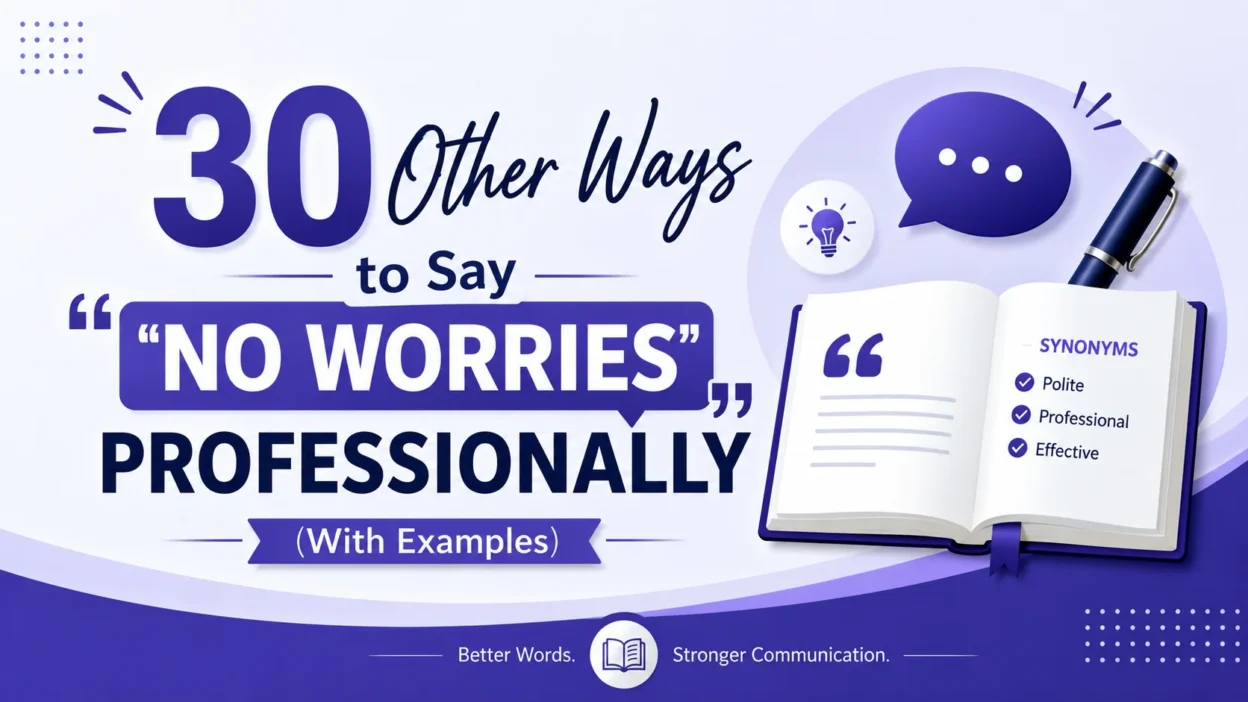
Other Ways to Say “No Worries” Professionally helps improve professional communication in every workplace with clearer, polished replies.In a fast-paced workplace, every business conversation depends on the right communication and tone. From my experience, replacing casual phrases with professional alternatives creates confidence, trust, and a positive impression. Whether you send business emails, join meetings, answer through Slack messages, make phone calls, use texts, DMs, or handle customer service, choosing the right professional phrase, alternative, alternative expressions, or synonyms helps you communicate with clarity, respect, courtesy, warmth, and professionalism. The best choice should always fit the audience, recipient, relationship, context, situation, business settings, business contexts, professional settings, professional environment, formal workplaces, formal interactions, formal report, formal setting, or formal tone while remaining friendly, natural, polite, helpful, engaging, dynamic, context-aware, effective, versatile, and appropriate instead of sounding stiff, unnatural, or repetitive.
I have also learned that professional ways and polished alternatives make every reply, response, responses, expression, and phrases more meaningful. Whether you speak with a client, manager, colleague, coworker, coworkers, customer, friend, or loved one, you can show respect, reassurance, understanding, forgiveness, courteous behaviour, accommodating demeanor, and genuine care. Replies such as happy to help, it’s my pleasure, my pleasure, certainly, you’re welcome, no sweat, it’s no trouble, that’s perfectly fine, I understand, do not worry about it, there’s nothing, sure thing, not a problem, No Worries, No Problem, and glad I could assist work well when acknowledging a favor, responding to gratitude, handling an apology, delay, mistake, request, requests, manageable issue, or burden. These choices improve business communication, communication style, communication tips, speech, daily conversations, business conversations, workplace conversations, workplace chats, work chats, workplace meetings, workplace situations, and even social settings, helping you avoid a common response, repeated phrase, or monotonous wording.
As you keep learning, mastering, discovering , choosing, and using better wording, your fluency and daily English naturally improve. Refined language, practical ways, small shifts, and the right words can significantly strengthen every message, build trust, reduce misunderstandings, and leave a lasting impression. During emailing, talking, texting, chatting, or writing, avoid flat replies and instead express yourself eloquently with thoughtful options that match the meaning, example, best use, and specific context. Helpful choices include no need to apologize, concern yourself, adjust tone, assuring someone, comforting, genuine warmth, engaging communication, dynamic communication, sharper communication, sound more professional, manageable, easy, effort, word choices, level of professionalism, expected, replace, perceive, shape, reliability, trustworthy, capable, competent, confident, politeness, reassurance, gratitude, thanks, apologizes, replying, replying naturally, examples, guide, blog post, English, copy, variety, repetition, formality, inconvenient, repertoire, classic, top alternatives, text-message ready, fixing something, bothered you, thousand times, Slack, suitable, improve, enhance, sharpen, and thirty.
What Does “No Worries” Mean?
“No worries” is a friendly expression used to let someone know that everything is okay and there is no need to apologize, stress, or feel concerned. It reassures the other person that a mistake, delay, or inconvenience is not a problem.
People commonly use this phrase to:
- Accept an apology
- Respond to a thank-you
- Reassure someone
- Reduce tension
- Show kindness and understanding
For example:
- “Sorry for replying late.”
- “No worries! I’m just happy to hear from you.”
The phrase creates a relaxed, positive, and supportive atmosphere, making conversations feel more comfortable.
Is It Professional to Say “No Worries”?
Yes, “No worries” can be professional, but its suitability depends on the context, audience, and level of formality. It is widely used in workplace conversations, emails, and customer service to reassure someone that a mistake, request, or delay is not a problem. The phrase creates a friendly, relaxed, and approachable tone, making it a popular choice in modern business communication.
However, in highly formal situations, such as legal correspondence, executive communication, or official business letters, “No worries” may sound too casual. In those cases, alternatives like “You’re welcome,” “It’s my pleasure,” “Not a problem,” or “Certainly” may be more appropriate. Choosing the right expression helps ensure your communication matches the level of professionalism expected by your audience.
Advantages and Disadvantages of Saying “No Worries”
Advantages
- Friendly and approachable
- Makes others feel comfortable
- Quickly reassures someone
- Suitable for casual conversations
- Creates a positive atmosphere
Disadvantages
- Can sound too informal in business settings
- May not suit communication with clients or executives
- Sometimes feels overused
- Doesn’t always match a professional tone
- Better alternatives exist for formal writing
Synonyms for “No Worries” Professionally
- You’re Welcome
- My Pleasure
- It Was My Pleasure
- Don’t Mention It
- Not a Problem
- No Problem at All
- Happy to Help
- Glad to Help
- Certainly
- Of Course
- Absolutely
- Anytime
- You’re Most Welcome
- Think Nothing of It
- I’m Happy to Assist
- It Was Nothing
- Always Happy to Help
- The Pleasure Is Mine
- No Trouble at All
- I’m Glad I Could Help
- Happy to Be of Assistance
- It’s Completely Fine
- Please Don’t Worry
- I’m Here to Help
- No Need to Apologize
- It’s All Good
- Rest Assured
- Consider It Done
- With Pleasure
- I’m Always Here If You Need Me
1. You’re Welcome
Meaning
A polite response that acknowledges someone’s gratitude.
Definition
“You’re welcome” is a professional expression used after someone says thank you, letting them know you were happy to help.
Detailed Explanation
This is one of the most widely accepted professional alternatives to “no worries.” It works in almost every setting, including workplaces, customer service, schools, and business emails. It sounds respectful while maintaining a warm tone.
Scenario Examples
- You’re welcome. I’m glad I could assist with your request.
- You’re welcome! Please let me know if you need anything else.
- You’re welcome. It was a pleasure working with you today.
Best Use
Professional emails, customer service, workplace conversations, and business communication.
Tone
Professional, polite, and warm.
2. My Pleasure
Meaning
Helping someone brings you genuine satisfaction.
Definition
A courteous phrase that expresses happiness in being able to assist someone.
Detailed Explanation
“My pleasure” sounds more elegant than “no worries.” It tells the other person that helping them wasn’t an inconvenience but something you were pleased to do. Many professionals use this expression to leave a positive impression.
Scenario Examples
- My pleasure. I’m always happy to assist.
- It was my pleasure helping you today.
- My pleasure. Please feel free to reach out anytime.
Best Use
Customer service, hospitality, formal emails, and client communication.
Tone
Warm, respectful, and professional.
3. It Was My Pleasure
Meaning
You sincerely enjoyed helping someone.
Definition
A more formal version of “My pleasure,” expressing appreciation for the opportunity to help.
Detailed Explanation
This phrase emphasizes gratitude and professional courtesy. It reassures the other person that their request wasn’t inconvenient and strengthens positive relationships.
Scenario Examples
- It was my pleasure assisting you with the project.
- It was my pleasure answering your questions.
- It was my pleasure working with your team.
Best Use
Business meetings, client communication, and appreciation emails.
Tone
Formal, appreciative, and courteous.
4. Don’t Mention It
Meaning
The help you provided wasn’t a burden.
Definition
A friendly response suggesting that thanks aren’t necessary.
Detailed Explanation
Although slightly less formal than “You’re welcome,” this phrase still works well in many professional environments. It creates a relaxed and reassuring atmosphere while remaining polite.
Scenario Examples
- Don’t mention it. I’m always glad to help.
- Don’t mention it—it was a simple task.
- Don’t mention it. Feel free to ask anytime.
Best Use
Friendly workplace conversations and informal professional settings.
Tone
Relaxed, kind, and reassuring.
5. Not a Problem
Meaning
The request caused no inconvenience.
Definition
A reassuring phrase that tells someone their request or mistake wasn’t an issue.
Detailed Explanation
This alternative is commonly used in workplaces because it communicates understanding while remaining professional. It helps reduce embarrassment after someone apologizes.
Scenario Examples
- Not a problem. I was happy to help.
- Not a problem at all. Everything has been taken care of.
- Not a problem. Thanks for letting me know.
Best Use
Office communication, customer support, and teamwork.
Tone
Professional, friendly, and reassuring.
6. No Problem at All
Meaning
There was absolutely no inconvenience.
Definition
A stronger version of “Not a problem,” offering additional reassurance.
Detailed Explanation
This phrase emphasizes that helping required little effort and that the other person shouldn’t worry. It works well when responding to apologies or requests.
Scenario Examples
- No problem at all. I’m glad everything worked out.
- No problem at all. Happy to help whenever needed.
- No problem at all. We appreciate your patience.
Best Use
Customer support, business emails, and internal communication.
Tone
Supportive, professional, and comforting.
7. Happy to Help
Meaning
Helping others brings you satisfaction.
Definition
A warm expression showing willingness and enthusiasm to assist.
Detailed Explanation
This phrase communicates kindness, teamwork, and approachability. It sounds more genuine than a simple “no worries” and helps build positive relationships.
Scenario Examples
- Happy to help whenever you need assistance.
- Happy to help with the presentation.
- Happy to help if you have more questions.
Best Use
Workplace collaboration, emails, and customer service.
Tone
Friendly, encouraging, and professional.
8. Glad to Help
Meaning
You are pleased that you could assist.
Definition
A polite response expressing genuine satisfaction in helping someone.
Detailed Explanation
This phrase sounds sincere and approachable while remaining suitable for professional settings. It reassures people that they didn’t create extra work.
Scenario Examples
- Glad to help. Let me know if anything else comes up.
- Glad to help with your report.
- Glad to help anytime.
Best Use
Professional conversations, emails, and teamwork.
Tone
Warm, supportive, and positive.
9. Certainly
Meaning
A confident way to say yes.
Definition
A formal expression that shows willingness to fulfill a request.
Detailed Explanation
Rather than simply saying “no worries,” “certainly” communicates professionalism and confidence. It is especially appropriate when responding to requests before completing a task.
Scenario Examples
- Certainly. I’ll send the document immediately.
- Certainly. I’d be happy to assist.
- Certainly. I’ll take care of that today.
Best Use
Business emails, customer service, and executive communication.
Tone
Professional, confident, and courteous.
10. Of Course
Meaning
Helping is completely natural and expected.
Definition
A reassuring phrase indicating your willingness to help without hesitation.
Detailed Explanation
“Of course” lets someone know you’re happy to assist and that their request isn’t an inconvenience. It feels both friendly and professional when used appropriately.
Scenario Examples
- Of course. I’ll be happy to review your document.
- Of course. Let me know if you need additional support.
- Of course. I’m here whenever you need assistance.
Best Use
Professional emails, meetings, workplace communication, and client support.
Tone
Friendly, reassuring, and professional.
11. Absolutely
Meaning
A confident and enthusiastic way to agree or reassure someone.
Definition
“Absolutely” is a professional expression that confirms your willingness to help or indicates complete agreement without hesitation.
Detailed Explanation
Unlike “no worries,” which focuses on reassuring someone, “absolutely” emphasizes your eagerness to assist. It conveys confidence, positivity, and professionalism, making it an excellent choice in workplace conversations and client interactions.
Scenario Examples
- Absolutely. I’ll have the report ready this afternoon.
- Absolutely! I’m happy to answer your questions.
- Absolutely. Please let me know if there’s anything else you need.
Best Use
Business emails, client communication, meetings, and customer support.
Tone
Professional, confident, and enthusiastic.
12. Anytime
Meaning
You are always willing to help whenever needed.
Definition
“Anytime” is a friendly expression that reassures someone they can ask for your assistance again in the future.
Detailed Explanation
This phrase creates a welcoming and approachable impression. While slightly more casual than some alternatives, it remains appropriate for many professional environments where friendly communication is encouraged.
Scenario Examples
- Anytime. I’m always happy to help.
- Anytime you need assistance, just let me know.
- Anytime! Feel free to reach out again.
Best Use
Coworker conversations, customer service, and friendly workplace communication.
Tone
Warm, approachable, and supportive.
13. You’re Most Welcome
Meaning
A warm and courteous response to someone’s gratitude.
Definition
“You’re most welcome” is a more formal version of “you’re welcome,” expressing sincere appreciation for being able to help.
Detailed Explanation
This phrase sounds polished and respectful. It is especially useful when speaking with clients, customers, or senior professionals because it demonstrates professionalism while maintaining a kind and welcoming tone.
Scenario Examples
- You’re most welcome. It was a pleasure assisting you today.
- You’re most welcome. Please don’t hesitate to contact us again.
- You’re most welcome. I’m glad everything worked out.
Best Use
Formal emails, hospitality, client communication, and customer service.
Tone
Formal, courteous, and appreciative.
14. Think Nothing of It
Meaning
The help you provided was small and didn’t require special thanks.
Definition
A polite expression used to reassure someone that helping them wasn’t an inconvenience.
Detailed Explanation
This phrase gently tells the other person that there is no need to feel indebted or overly thankful. Although it has a slightly traditional tone, it remains a thoughtful alternative in professional conversations.
Scenario Examples
- Think nothing of it. I’m always glad to assist.
- Think nothing of it—it was my pleasure.
- Think nothing of it. I’m happy everything was resolved.
Best Use
Professional conversations, appreciation responses, and customer communication.
Tone
Kind, reassuring, and respectful.
15. I’m Happy to Assist
Meaning
You are pleased to provide help.
Definition
A professional expression that communicates willingness and satisfaction in assisting someone.
Detailed Explanation
This phrase sounds more formal than “happy to help” and is commonly used in business correspondence. It shows professionalism while remaining warm and approachable.
Scenario Examples
- I’m happy to assist with your request.
- I’m happy to assist if you need additional information.
- I’m happy to assist you throughout the process.
Best Use
Business emails, customer support, and professional communication.
Tone
Professional, polite, and supportive.
16. It Was Nothing
Meaning
The assistance required very little effort.
Definition
A humble response that minimizes the effort involved in helping someone.
Detailed Explanation
This phrase reassures the other person that helping them wasn’t inconvenient. It reflects humility and kindness, making the conversation feel more comfortable and sincere.
Scenario Examples
- It was nothing. I’m glad everything worked out.
- It was nothing. Happy I could help.
- It was nothing at all. Don’t worry about it.
Best Use
Casual workplace conversations, appreciation responses, and friendly communication.
Tone
Modest, warm, and reassuring.
17. Always Happy to Help
Meaning
You consistently enjoy helping others.
Definition
A reassuring phrase that expresses an ongoing willingness to provide assistance whenever needed.
Detailed Explanation
Unlike a simple “no worries,” this expression strengthens relationships by letting others know they can confidently approach you again. It promotes teamwork, trust, and a positive working environment.
Scenario Examples
- Always happy to help whenever you need assistance.
- Always happy to help with future projects.
- Always happy to help. Please don’t hesitate to ask.
Best Use
Customer service, workplace collaboration, and professional emails.
Tone
Friendly, supportive, and encouraging.
18. The Pleasure Is Mine
Meaning
Helping someone brings you satisfaction.
Definition
A courteous expression used to show that assisting someone was enjoyable and appreciated.
Detailed Explanation
This phrase is particularly effective after meetings, interviews, networking events, or successful collaborations. It leaves a positive impression by showing gratitude for the interaction.
Scenario Examples
- The pleasure is mine. Thank you for the opportunity.
- The pleasure is mine. I enjoyed working with your team.
- The pleasure is mine. I appreciate your kind words.
Best Use
Networking, business meetings, interviews, and professional introductions.
Tone
Elegant, professional, and appreciative.
19. No Trouble at All
Meaning
Helping requires no difficulty or inconvenience.
Definition
A reassuring phrase that lets someone know their request wasn’t burdensome.
Detailed Explanation
This alternative immediately eases any concern the other person may have about asking for help. It communicates patience, kindness, and professionalism while maintaining a calm and positive tone.
Scenario Examples
- No trouble at all. I’m glad I could assist.
- No trouble at all. Everything has been taken care of.
- No trouble at all. Feel free to contact me again.
Best Use
Customer service, business communication, and workplace support.
Tone
Professional, reassuring, and friendly.
20. I’m Glad I Could Help
Meaning
You are pleased that your assistance was useful.
Definition
A thoughtful expression that communicates genuine satisfaction in being able to support someone.
Detailed Explanation
This phrase is one of the most sincere alternatives to “no worries.” It acknowledges the positive outcome while reinforcing your willingness to help. It works well in both professional and personal settings because it sounds genuine and compassionate.
Scenario Examples
- I’m glad I could help resolve the issue.
- I’m glad I could help with your presentation.
- I’m glad I could help. Please let me know if you need anything else.
Best Use
Professional emails, customer support, teamwork, appreciation responses, and workplace communication.
Tone
Warm, sincere, professional, and encouraging.
21. Happy to Be of Assistance
Meaning
A professional and courteous way to express that you were pleased to help someone.
Definition
“Happy to be of assistance” is a formal expression that communicates your willingness and satisfaction in providing support.
Detailed Explanation
This phrase is commonly used in business communication, customer service, and professional emails. It sounds more polished than “no worries” and leaves a positive impression by emphasizing your commitment to helping others.
Scenario Examples
- Happy to be of assistance. Please let me know if you need anything else.
- I’m happy to be of assistance with your request.
- We’re always happy to be of assistance whenever you need support.
Best Use
Professional emails, client communication, customer service, and workplace conversations.
Tone
Professional, courteous, and welcoming.
22. It’s Completely Fine
Meaning
Everything is okay, and there is no reason to feel concerned.
Definition
A reassuring phrase used to let someone know that a mistake, delay, or request is perfectly acceptable.
Detailed Explanation
This alternative offers comfort while maintaining professionalism. It works especially well when someone apologizes for a small inconvenience and you want to ease their concerns.
Scenario Examples
- It’s completely fine. Thank you for letting me know.
- It’s completely fine—we’ve already resolved the issue.
- It’s completely fine. There’s nothing to worry about.
Best Use
Workplace communication, emails, customer support, and team discussions.
Tone
Reassuring, polite, and professional.
23. Please Don’t Worry
Meaning
You want someone to stop feeling anxious about the situation.
Definition
A caring expression that reassures someone everything is under control.
Detailed Explanation
This phrase demonstrates empathy and kindness. It helps calm someone’s concerns while maintaining a respectful and professional tone, making it ideal for situations involving apologies or unexpected issues.
Scenario Examples
- Please don’t worry. Everything has been taken care of.
- Please don’t worry about the delay.
- Please don’t worry—we’re happy to help.
Best Use
Customer service, workplace communication, and professional emails.
Tone
Warm, compassionate, and reassuring.
24. I’m Here to Help
Meaning
You are available and willing to provide assistance.
Definition
A supportive phrase that reminds someone they can rely on you whenever they need help.
Detailed Explanation
This expression builds trust and strengthens professional relationships. It reassures the other person that you are committed to supporting them and encourages open communication.
Scenario Examples
- I’m here to help if you have any questions.
- I’m here to help throughout the entire process.
- Please remember that I’m here to help whenever needed.
Best Use
Customer support, mentoring, teamwork, and workplace communication.
Tone
Friendly, supportive, and encouraging.
25. No Need to Apologize
Meaning
The situation does not require an apology.
Definition
A thoughtful phrase that reassures someone they haven’t done anything seriously wrong.
Detailed Explanation
When someone apologizes unnecessarily, this expression immediately eases tension. It demonstrates understanding and professionalism while encouraging a positive conversation.
Scenario Examples
- No need to apologize. Everything worked out perfectly.
- No need to apologize. I completely understand.
- No need to apologize—we all make mistakes sometimes.
Best Use
Professional emails, workplace conversations, and customer support.
Tone
Kind, understanding, and reassuring.
26. It’s All Good
Meaning
Everything is fine, and there are no hard feelings.
Definition
A casual phrase used to reassure someone that there isn’t a problem.
Detailed Explanation
Although this expression is friendlier than many professional alternatives, it works well in relaxed workplaces or among coworkers who have an informal relationship. For highly formal communication, choose a more polished alternative.
Scenario Examples
- It’s all good. Thanks for letting me know.
- It’s all good—we’ve already solved the issue.
- It’s all good. Don’t worry about it.
Best Use
Friendly office conversations, team chats, and casual workplace communication.
Tone
Casual, friendly, and reassuring.
27. Rest Assured
Meaning
You can feel confident that everything will be handled properly.
Definition
A formal expression used to provide reassurance and confidence.
Detailed Explanation
This phrase is especially effective in professional communication because it assures the other person that appropriate action has already been taken or will be taken soon. It promotes trust and reliability.
Scenario Examples
- Rest assured, we’ll resolve the issue promptly.
- Rest assured that your request is being processed.
- Rest assured, everything is under control.
Best Use
Business emails, customer support, executive communication, and client updates.
Tone
Professional, confident, and reassuring.
28. Consider It Done
Meaning
The task will be completed without delay.
Definition
A confident expression that assures someone their request has been accepted and will be handled.
Detailed Explanation
This phrase communicates efficiency and reliability. It shows that you’re taking immediate action, making it an excellent alternative when responding to requests in a professional setting.
Scenario Examples
- Consider it done. I’ll send the files this afternoon.
- Consider it done. I’ll take care of everything.
- Consider it done—you’ll receive an update shortly.
Best Use
Project management, workplace communication, customer service, and business emails.
Tone
Confident, proactive, and professional.
29. With Pleasure
Meaning
Helping someone brings you genuine satisfaction.
Definition
A polite and elegant phrase used to express that assisting someone was enjoyable.
Detailed Explanation
“With pleasure” is a refined alternative to “no worries.” It communicates appreciation, professionalism, and a positive attitude while making your response feel sincere and respectful.
Scenario Examples
- With pleasure. I’m happy to assist you.
- With pleasure. Thank you for reaching out.
- With pleasure. Please contact us anytime you need support.
Best Use
Formal emails, hospitality, customer service, and professional conversations.
Tone
Elegant, courteous, and professional.
30. I’m Always Here If You Need Me
Meaning
You are consistently available to provide support whenever necessary.
Definition
A caring expression that reassures someone they can confidently reach out for future assistance.
Detailed Explanation
This phrase goes beyond simply saying “no worries.” It builds stronger relationships by showing ongoing support and genuine concern. Whether you’re speaking with a client, coworker, employee, or friend, it communicates kindness, reliability, and approachability.
Scenario Examples
- I’m always here if you need me. Don’t hesitate to reach out.
- I’m always here if you have additional questions.
- I’m always here if you need further assistance in the future.
Best Use
Professional relationships, mentoring, customer support, and appreciation messages.
Tone
Warm, supportive, compassionate, and professional.
Conclusion
Finding Other Ways to Say “No Worries” Professionally helps you communicate with greater confidence, clarity, and professionalism. The right phrase can make your emails, meetings, and workplace conversations sound more respectful, polite, and natural while still maintaining a warm and approachable tone. Even small wording changes can strengthen your business communication, build trust, and leave a lasting positive impression. As you practice these alternatives, choosing the best response for every situation, audience, and tone becomes much easier, helping you build stronger professional relationships and communicate more effectively every day.
FAQs
Q1. What is the most professional alternative to “No Worries”?
Some of the most professional alternatives include My Pleasure, Happy to Help, Certainly, You’re Welcome, and It’s No Trouble. The best choice depends on your audience, tone, and the specific situation.
Q2. Is “No Worries” appropriate in business emails?
Yes, “No Worries” can work in friendly workplaces, but it may sound too casual in formal business emails. Choosing a more professional alternative often creates a stronger, more polished, and courteous impression.
Q3. Which phrases can I use when replying to a client?
When responding to a client, you can use phrases like My Pleasure, Happy to Help, Certainly, That’s Perfectly Fine, or Glad I Could Assist. These expressions sound respectful, professional, reassuring, and customer-friendly.
Q4. Why should I learn different ways to say “No Worries”?
Learning a variety of professional expressions keeps your communication from becoming repetitive. It also improves clarity, demonstrates professionalism, and helps you match your response to different workplace situations, relationships, and communication styles.
Q5. Can these alternatives be used outside the workplace?
Absolutely. Many of these alternatives work well in conversations with friends, family members, customers, or colleagues. Choosing the right phrase helps you remain friendly, helpful, respectful, and polite in both personal and professional communication.