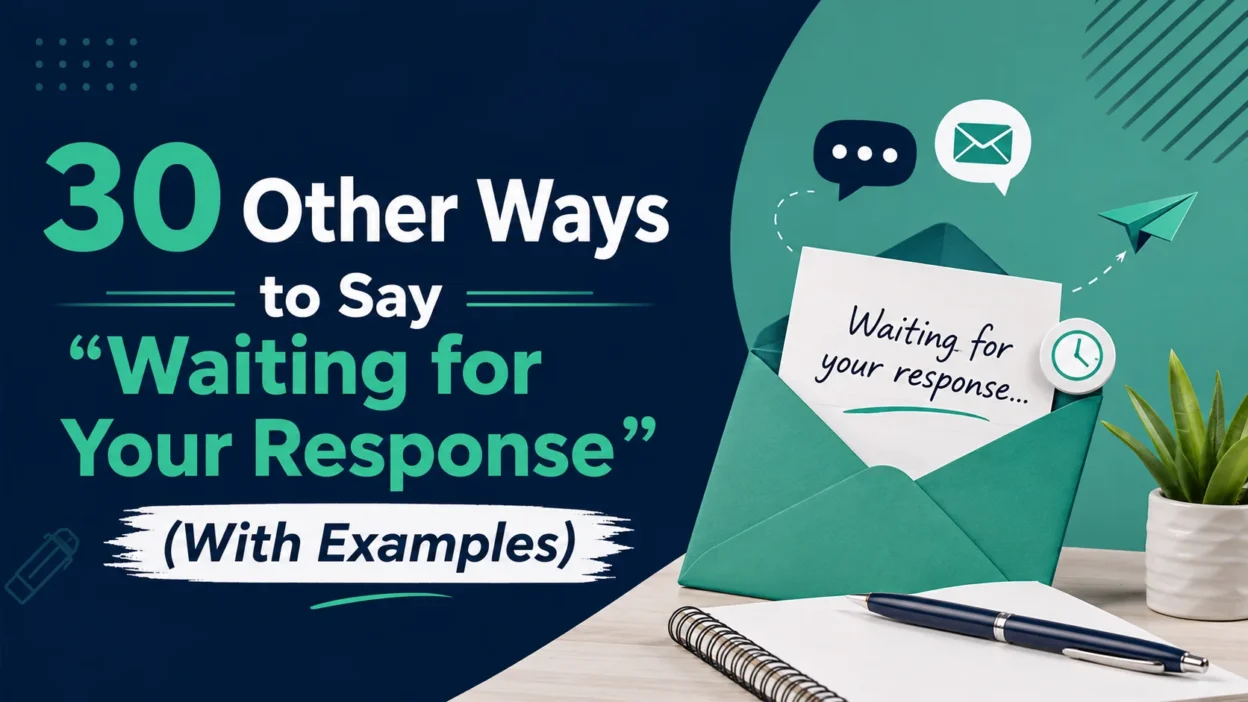
Other Ways to Say “Waiting for Your Response” helps improve email communication with polite alternatives that create a warm professional style.Finding the right words in a professional setting can make your email, message, and overall communication more thoughtful and effective. Repeating the same phrase may feel common, predictable, or overly direct, so using professional alternatives with a polite, friendly, and natural tone can build a stronger connection with the reader. Expressions like I await your response, waiting for your reply, and I will wait for your response can be adjusted based on the situation, including a business email, follow-up message, or personal conversation.
Good wording shows respect, patience, and a clear expectation while avoiding unnecessary pressure. A well-written follow-up with courteous, warm, and professional language feels more approachable. Instead of a stiff closing, writers can use clear communication, engaging writing, and a considerate approach to encourage a reply and create a more human connection with a client, colleague, teacher, or friend.
From my experience with professional writing, carefully selected alternative ways can improve clarity, strengthen email etiquette, and create a positive impression. Choosing suitable phrasing for a formal, casual, or business-related situation helps maintain a balance between professionalism and approachability. These polite alternatives make everyday communication more meaningful and effective.
What Does “Waiting for Your Response” Mean?
The phrase “Waiting for Your Response” means that you are expecting or looking forward to receiving a reply from someone. It lets the recipient know that their answer is important and that you’ll continue once they respond.
People often use this phrase in professional emails, customer service conversations, job applications, academic communication, and personal messages. It signals patience, respect, and a willingness to continue the conversation after hearing back.
Although the phrase is perfectly acceptable, choosing a more specific alternative can make your message sound friendlier, more appreciative, or more confident, depending on the context.
Is It Professional/Polite to Say “Waiting for Your Response”?
Yes. “Waiting for Your Response” is both professional and polite. It clearly communicates that you’re expecting a reply without sounding demanding.
However, the tone depends on how it’s used. Simply writing “Waiting for your response.” may feel a little abrupt. Adding a polite expression like “Thank you,” “I appreciate your time,” or “I look forward to hearing from you” creates a friendlier impression.
Using different expressions also helps you avoid repetition and tailor your message to the relationship you have with the recipient.
Advantages and Disadvantages of Saying “Waiting for Your Response”
Advantages
- Professional and widely accepted.
- Clearly communicates that you’re expecting a reply.
- Suitable for emails, letters, and formal messages.
- Shows patience and respect.
- Easy for recipients to understand.
Disadvantages
- Can sound generic if used frequently.
- May feel slightly impersonal.
- Doesn’t always express gratitude or enthusiasm.
- Can seem passive in some situations.
- Better alternatives may fit specific audiences more naturally.
Synonyms for “Waiting for Your Response”
- I Look Forward to Hearing from You
- Please Let Me Know Your Thoughts
- I’d Appreciate Your Reply
- Looking Forward to Your Feedback
- I’ll Be Happy to Hear from You
- Please Get Back to Me When You Can
- I Hope to Hear from You Soon
- I’m Eager to Hear Your Thoughts
- Please Keep Me Updated
- Whenever You Have a Chance, Please Reply
- I Await Your Feedback
- Please Share Your Decision
- I’m Looking Forward to Your Update
- Feel Free to Respond at Your Convenience
- I’ll Watch for Your Reply
- I’d Love to Know What You Think
- Please Reach Out When You’re Ready
- I’ll Appreciate Any Update
- Please Keep Me Posted
- Your Response Would Be Greatly Appreciated
- I Hope You’ll Let Me Know
- Looking Forward to Your Thoughts
- I’ll Wait to Hear from You
- Please Don’t Hesitate to Respond
- I’d Welcome Your Feedback
- Please Reply When Convenient
- I’m Interested in Your Opinion
- Your Reply Will Help Me Move Forward
- I Value Your Response
- Thank You in Advance for Your Reply
1. I Look Forward to Hearing from You
Meaning
“I Look Forward to Hearing from You” expresses anticipation and optimism that the other person will respond.
Definition
It is a professional closing phrase used to politely indicate that you expect and welcome a future reply.
Detailed Explanation
This is one of the most common alternatives because it sounds positive, courteous, and confident. Instead of focusing on the fact that you’re waiting, it highlights your enthusiasm for continuing the conversation. It’s appropriate in business emails, job applications, customer communication, and even personal correspondence.
Scenario Example
Thank you for reviewing my proposal. I look forward to hearing from you regarding the next steps.
Best Use
Business emails, job applications, sales proposals, client communication, and professional follow-ups.
Tone
Professional, polite, optimistic, and respectful.
2. Please Let Me Know Your Thoughts
Meaning
This phrase politely asks someone to share their opinion or feedback.
Definition
A friendly and respectful request inviting another person to respond with their ideas or perspective.
Detailed Explanation
Rather than simply waiting, this alternative encourages conversation and collaboration. It makes the recipient feel that their opinion is valued, making it an excellent choice for workplace discussions, creative projects, or planning conversations.
Scenario Example
I’ve attached the revised document. Please let me know your thoughts whenever you have time.
Best Use
Team discussions, project reviews, creative work, and client feedback.
Tone
Warm, professional, collaborative, and inviting.
3. I’d Appreciate Your Reply
Meaning
This expression politely communicates that receiving a response would be valued.
Definition
A courteous request showing gratitude in advance for someone’s time and response.
Detailed Explanation
Using “I’d Appreciate Your Reply” emphasizes respect and appreciation rather than urgency. It tells the reader that their response matters while maintaining a professional and considerate tone. This wording is especially useful when requesting information or confirmation.
Scenario Example
I’d appreciate your reply by Friday so we can finalize the schedule.
Best Use
Professional emails, business requests, formal correspondence, and administrative communication.
Tone
Respectful, formal, grateful, and professional.
4. Looking Forward to Your Feedback
Meaning
This phrase expresses that you’re excited to receive comments, suggestions, or opinions.
Definition
A polite statement indicating that feedback is welcomed and appreciated.
Detailed Explanation
When you’re seeking constructive criticism, approval, or recommendations, this expression sounds much more engaging than simply saying you’re waiting. It encourages open communication and shows you’re interested in improving or moving forward based on the recipient’s input.
Scenario Example
I’ve completed the first draft. Looking forward to your feedback whenever you have an opportunity to review it.
Best Use
Project reviews, performance discussions, academic work, and creative collaboration.
Tone
Professional, positive, encouraging, and open-minded.
5. I’ll Be Happy to Hear from You
Meaning
This phrase expresses that you’ll be pleased when the other person responds.
Definition
A warm expression showing friendly anticipation for future communication.
Detailed Explanation
Unlike more formal alternatives, this wording adds a personal and approachable touch. It feels genuine without sounding overly casual, making it suitable for both professional relationships and personal conversations.
Scenario Example
If you have any questions, I’ll be happy to hear from you whenever you’re ready.
Best Use
Friendly emails, customer support, networking, and personal communication.
Tone
Warm, friendly, positive, and encouraging.
6. Please Get Back to Me When You Can
Meaning
This expression politely asks someone to reply whenever they’re available.
Definition
A considerate request that gives the recipient flexibility while still encouraging a response.
Detailed Explanation
This phrase recognizes that the other person may be busy and avoids creating unnecessary pressure. It demonstrates patience, making it a great option for colleagues, friends, or clients when there is no immediate deadline.
Scenario Example
Please get back to me when you can regarding the meeting schedule.
Best Use
Everyday workplace communication, friendly emails, client conversations, and casual professional settings.
Tone
Relaxed, polite, patient, and respectful.
7. I Hope to Hear from You Soon
Meaning
This phrase expresses your hope for a timely response.
Definition
A polite statement that gently communicates you’d appreciate hearing back in the near future.
Detailed Explanation
Compared with more formal expressions, this alternative feels friendly and optimistic. It encourages a reply without sounding demanding, making it useful for many professional and personal situations.
Scenario Example
Thank you for considering my application. I hope to hear from you soon.
Best Use
Job applications, business inquiries, customer communication, and general follow-up emails.
Tone
Optimistic, friendly, professional, and courteous.
8. I’m Eager to Hear Your Thoughts
Meaning
This expression shows you’re enthusiastic about receiving someone’s opinion.
Definition
A warm and engaging phrase expressing genuine interest in another person’s feedback.
Detailed Explanation
This alternative highlights enthusiasm rather than simply waiting. It works especially well when you’re discussing ideas, proposals, creative work, or collaborative projects, as it makes the recipient feel that their perspective truly matters.
Scenario Example
I’ve prepared a few design concepts. I’m eager to hear your thoughts on which direction you prefer.
Best Use
Creative collaboration, brainstorming, design reviews, and team discussions.
Tone
Enthusiastic, friendly, engaging, and professional.
9. Please Keep Me Updated
Meaning
This phrase asks someone to continue sharing new information or progress.
Definition
A polite request for ongoing communication about a situation.
Detailed Explanation
Unlike phrases that ask for a single reply, this expression is ideal when multiple updates may be needed over time. It shows continued interest and encourages regular communication without sounding demanding.
Scenario Example
Please keep me updated on the project’s progress throughout the week.
Best Use
Project management, business communication, customer service, and team collaboration.
Tone
Professional, supportive, respectful, and cooperative.
10. Whenever You Have a Chance, Please Reply
Meaning
This phrase politely requests a response at the recipient’s convenience.
Definition
A considerate way of asking for a reply while acknowledging that the other person may be busy.
Detailed Explanation
This alternative removes any sense of urgency and demonstrates understanding, patience, and courtesy. It’s an excellent choice when your request isn’t time-sensitive and you want your message to sound approachable.
Scenario Example
Whenever you have a chance, please reply with your availability for next week’s meeting.
Best Use
Professional emails, casual workplace conversations, client communication, and personal messages.
Tone
Kind, patient, professional, and understanding.
11. I Await Your Feedback
Meaning
“I Await Your Feedback” means you are patiently expecting someone’s comments, suggestions, or opinion.
Definition
A formal expression used to indicate that you are waiting for another person’s response before proceeding.
Detailed Explanation
This phrase is commonly used in professional and academic settings. It sounds respectful and demonstrates that you value the recipient’s expertise or opinion. Because it is more formal than everyday language, it works especially well in business correspondence.
Scenario Example
I’ve attached the revised proposal. I await your feedback before making any additional changes.
Best Use
Business emails, academic communication, client reviews, and formal correspondence.
Tone
Formal, professional, respectful, and patient.
12. Please Share Your Decision
Meaning
This phrase politely asks someone to inform you of the choice they have made.
Definition
A courteous request for a final answer or decision.
Detailed Explanation
When you need someone to approve, reject, or choose between options, this alternative is both direct and polite. It makes your expectations clear while remaining respectful.
Scenario Example
Once you’ve reviewed the options, please share your decision at your earliest convenience.
Best Use
Business proposals, job offers, approvals, and planning discussions.
Tone
Professional, clear, respectful, and courteous.
13. I’m Looking Forward to Your Update
Meaning
This expression communicates that you are eager to receive new information.
Definition
A polite statement expressing anticipation for an update regarding a situation.
Detailed Explanation
Unlike asking for a simple reply, this phrase is useful when you’re expecting progress reports, status updates, or news about ongoing work. It keeps the conversation positive and collaborative.
Scenario Example
I’m looking forward to your update after tomorrow’s client meeting.
Best Use
Project management, team communication, customer service, and professional follow-ups.
Tone
Professional, friendly, encouraging, and positive.
14. Feel Free to Respond at Your Convenience
Meaning
This phrase lets the recipient know they may reply whenever it suits their schedule.
Definition
A considerate request that places no unnecessary pressure on the recipient.
Detailed Explanation
This alternative is ideal when your request isn’t urgent. It demonstrates patience and respect for the recipient’s time, making it especially effective in professional and personal communication.
Scenario Example
Feel free to respond at your convenience if you have any additional suggestions.
Best Use
Professional emails, customer communication, networking, and friendly conversations.
Tone
Polite, patient, understanding, and respectful.
15. I’ll Watch for Your Reply
Meaning
This phrase indicates that you’ll be expecting the recipient’s response.
Definition
A friendly way to express that you’ll be looking out for someone’s message.
Detailed Explanation
This wording feels more conversational than traditional business phrases. It creates a warm, approachable tone while still expressing your expectation of a reply.
Scenario Example
Thanks for considering my request. I’ll watch for your reply later this week.
Best Use
Friendly business emails, networking, and personal correspondence.
Tone
Warm, casual-professional, friendly, and optimistic.
16. I’d Love to Know What You Think
Meaning
This expression shows that you genuinely value someone’s opinion.
Definition
A warm invitation encouraging another person to share their thoughts.
Detailed Explanation
Rather than simply requesting a response, this phrase makes the recipient feel appreciated. It’s especially effective when discussing ideas, creative work, or personal recommendations.
Scenario Example
I’ve redesigned the presentation. I’d love to know what you think.
Best Use
Creative collaboration, brainstorming, personal communication, and feedback requests.
Tone
Friendly, warm, enthusiastic, and engaging.
17. Please Reach Out When You’re Ready
Meaning
This phrase politely asks someone to contact you whenever they feel prepared.
Definition
A considerate invitation that respects the recipient’s timing.
Detailed Explanation
This alternative is especially useful when discussing sensitive topics or when the other person may need additional time before responding.
Scenario Example
Take all the time you need. Please reach out when you’re ready to continue the discussion.
Best Use
Supportive conversations, professional communication, customer service, and personal relationships.
Tone
Compassionate, patient, respectful, and kind.
18. I’ll Appreciate Any Update
Meaning
This phrase expresses gratitude for any information the recipient can provide.
Definition
A polite request indicating that even a brief update would be helpful.
Detailed Explanation
Sometimes a complete answer isn’t immediately available. This alternative acknowledges that and shows appreciation for whatever information the other person can share.
Scenario Example
I’ll appreciate any update regarding the shipment status.
Best Use
Customer service, project tracking, business communication, and vendor follow-ups.
Tone
Professional, grateful, patient, and respectful.
19. Please Keep Me Posted
Meaning
This expression asks someone to continue providing updates as things progress.
Definition
An informal yet professional request for ongoing communication.
Detailed Explanation
Unlike asking for a single response, this phrase encourages regular updates. It’s especially useful for projects, ongoing discussions, or situations that may change over time.
Scenario Example
Please keep me posted on any developments regarding the project timeline.
Best Use
Workplace communication, project management, customer service, and team collaboration.
Tone
Friendly, professional, supportive, and collaborative.
20. Your Response Would Be Greatly Appreciated
Meaning
This phrase politely emphasizes how valuable the recipient’s reply would be.
Definition
A formal expression of appreciation for someone’s response.
Detailed Explanation
This alternative combines professionalism with gratitude. It communicates respect for the recipient’s time while encouraging them to respond.
Scenario Example
Your response would be greatly appreciated before Friday’s meeting.
Best Use
Formal requests, business correspondence, government communication, and professional inquiries.
Tone
Formal, grateful, professional, and courteous.
21. I Hope You’ll Let Me Know
Meaning
This phrase expresses hope that the recipient will provide an answer.
Definition
A warm and friendly request for future communication.
Detailed Explanation
This alternative sounds less formal than many business expressions, making it suitable for maintaining a conversational tone while still encouraging a reply.
Scenario Example
I hope you’ll let me know whether you’re available next week.
Best Use
Friendly emails, personal messages, and casual professional communication.
Tone
Warm, optimistic, friendly, and polite.
22. Looking Forward to Your Thoughts
Meaning
This phrase expresses excitement about hearing someone’s ideas or opinions.
Definition
A courteous expression inviting feedback.
Detailed Explanation
This alternative highlights collaboration and mutual respect. It encourages open discussion while showing appreciation for the recipient’s perspective.
Scenario Example
I’ve outlined several options. Looking forward to your thoughts on the best approach.
Best Use
Meetings, brainstorming sessions, client discussions, and creative work.
Tone
Positive, professional, friendly, and collaborative.
23. I’ll Wait to Hear from You
Meaning
This expression indicates that you’ll hold off until the recipient responds.
Definition
A patient statement showing you’re willing to wait before taking further action.
Detailed Explanation
This phrase communicates patience and flexibility without creating pressure. It works well when another person’s input is needed before making a decision.
Scenario Example
I’ll wait to hear from you before confirming the reservation.
Best Use
Planning conversations, business communication, and personal arrangements.
Tone
Patient, calm, respectful, and professional.
24. Please Don’t Hesitate to Respond
Meaning
This phrase encourages someone to reply without worrying about bothering you.
Definition
A welcoming invitation for open communication.
Detailed Explanation
This alternative helps create a comfortable atmosphere. It reassures the recipient that their reply is welcome and appreciated.
Scenario Example
If you have any questions, please don’t hesitate to respond.
Best Use
Customer service, support emails, professional communication, and networking.
Tone
Encouraging, friendly, professional, and welcoming.
25. I’d Welcome Your Feedback
Meaning
This phrase expresses that you would gladly receive comments or suggestions.
Definition
A respectful invitation encouraging constructive input.
Detailed Explanation
This wording shows openness to improvement and collaboration. It is especially effective when requesting reviews, recommendations, or professional advice.
Scenario Example
I’d welcome your feedback on the revised marketing strategy.
Best Use
Business reviews, creative projects, academic work, and performance evaluations.
Tone
Professional, open-minded, respectful, and positive.
26. Please Reply When Convenient
Meaning
This phrase politely asks the recipient to respond whenever they have time.
Definition
A considerate request that respects another person’s schedule.
Detailed Explanation
This alternative communicates patience while still expressing that a response is appreciated. It works well when there is no immediate deadline.
Scenario Example
Please reply when convenient with your preferred meeting time.
Best Use
Professional emails, customer communication, and casual workplace discussions.
Tone
Polite, patient, professional, and understanding.
27. I’m Interested in Your Opinion
Meaning
This expression tells someone that their viewpoint matters to you.
Definition
A warm statement inviting another person’s perspective.
Detailed Explanation
This phrase goes beyond requesting a response by emphasizing the importance of the recipient’s ideas. It helps build trust and encourages thoughtful conversation.
Scenario Example
I’m interested in your opinion before we make a final decision.
Best Use
Team discussions, planning meetings, creative projects, and personal conversations.
Tone
Respectful, engaging, friendly, and collaborative.
28. Your Reply Will Help Me Move Forward
Meaning
This phrase explains that the recipient’s response is necessary for your next step.
Definition
A polite statement showing why a reply is important.
Detailed Explanation
Providing a reason for your request often increases the likelihood of receiving a timely response. This wording is clear without sounding demanding.
Scenario Example
Your reply will help me move forward with the project timeline.
Best Use
Business communication, project planning, client approvals, and administrative tasks.
Tone
Professional, clear, respectful, and purposeful.
29. I Value Your Response
Meaning
This phrase communicates that the recipient’s reply is important and appreciated.
Definition
A respectful expression emphasizing the significance of another person’s response.
Detailed Explanation
This alternative makes the recipient feel respected by highlighting the value of their input. It strengthens professional and personal relationships through appreciation.
Scenario Example
I value your response and appreciate the time you’ve taken to review my request.
Best Use
Professional emails, customer communication, feedback requests, and formal correspondence.
Tone
Grateful, professional, respectful, and sincere.
30. Thank You in Advance for Your Reply
Meaning
This expression thanks the recipient before they respond, showing appreciation in advance.
Definition
A courteous closing that expresses gratitude while encouraging a reply.
Detailed Explanation
This is a widely used professional email closing because it combines gratitude, respect, and optimism. However, it should be used thoughtfully, as thanking someone in advance may occasionally feel slightly presumptive if the request is significant.
Scenario Example
Thank you in advance for your reply. I truly appreciate your time and assistance.
Best Use
Business emails, customer support, professional requests, and formal correspondence.
Tone
Professional, grateful, courteous, and positive.
Conclusion
Choosing the right words instead of repeating Waiting for Your Response can make your emails, messages, and professional conversations feel more respectful and engaging. Using different professional alternatives helps you maintain a balance between being polite, clear, and confident while showing patience and consideration toward the reader. Whether you are writing a business email, follow-up message, or personal note, the right phrase can create a stronger connection and encourage a positive reply. Thoughtful communication reflects professionalism and helps your messages leave a lasting impression.
FAQs
Q1. What are some professional alternatives to “Waiting for Your Response”?
Some professional alternatives include “I look forward to your response,” “I await your feedback,” “I appreciate your reply at your earliest convenience,” and “I would appreciate your thoughts on this matter.” These phrases sound more polite and professional in workplace communication.
Q2. Is “Waiting for Your Response” a polite phrase to use?
Yes, “Waiting for Your Response” is polite and understandable, but it may sometimes sound direct or repetitive. Using more varied expressions can make your message feel warmer and more considerate.
Q3. Can I use “I await your response” in a business email?
Yes, “I await your response” can be used in formal business emails. However, depending on the relationship and tone, softer phrases like “I look forward to hearing from you” may sound more natural and friendly.
Q4. Why should I use different ways to say “Waiting for Your Response”?
Using different expressions helps improve communication, avoid repetition, and match the right tone for different situations. It allows you to sound more professional, friendly, and thoughtful when requesting a reply.
Q5. What is the best way to end an email while waiting for a reply?
The best closing depends on the situation. Professional options include “I look forward to your feedback,” “Thank you for your time and consideration,” or “I appreciate your prompt response.” These phrases maintain respect while encouraging a response.