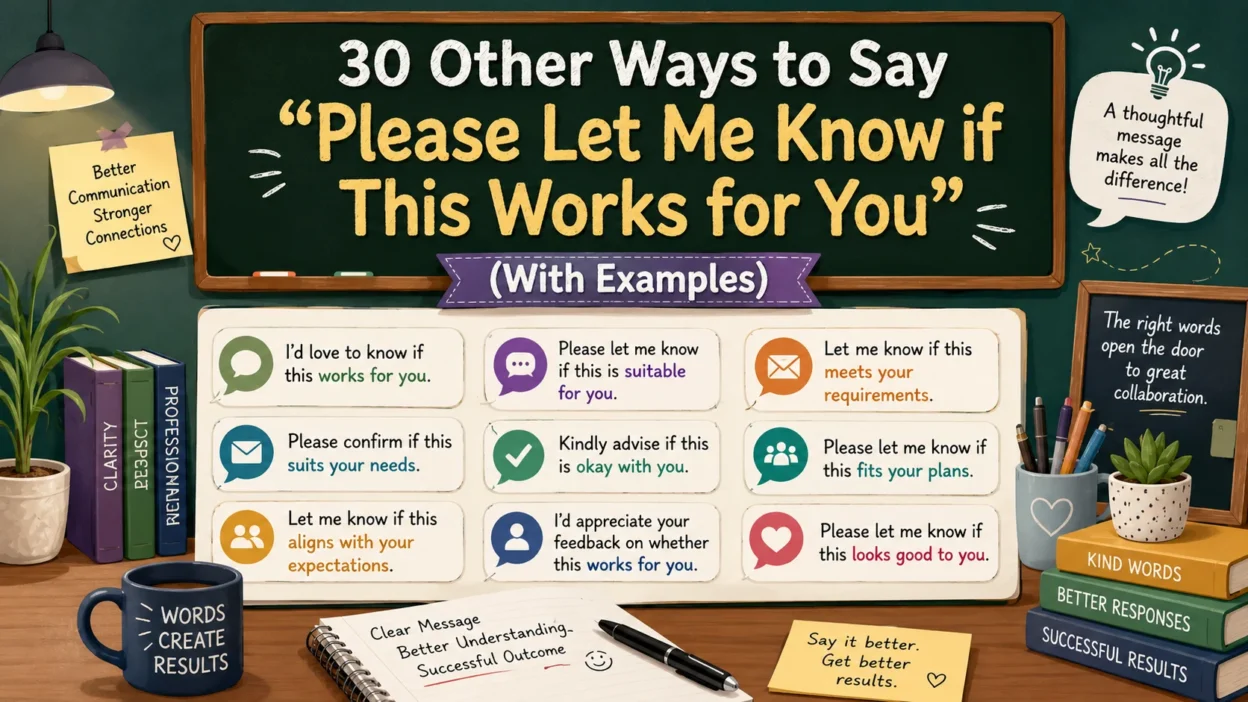
Discover Other Ways to Say “Please Let Me Know if This Works for You” to create messages with clear communication, better wording, and trust. In my experience with professional communication and business communication, the right phrase can make a message sound more natural and respectful. Instead of using the same request repeatedly, I prefer alternative expressions, smart alternatives, and different words based on the audience and scenario. These choices improve message clarity, create a more professional, warmer, and approachable style, while supporting workplace communication, thoughtful communication, and stronger connections with clients, colleagues, and friends.
When creating emails or workplace messages, I focus on effective communication, clarity in writing, and a balanced professional tone. Using phrases like kindly confirm, let me know your thoughts, please advise, and share your feedback can encourage a helpful response, better feedback, and stronger trust. I have found that changing phrasing avoids a repetitive writing style and makes communication more engaging, friendly, and based on respectful language. This approach improves email writing, email etiquette, and correspondence while maintaining clarity, confidence, and professionalism.
The best wording depends on the situation, including project discussions, scheduling conversations, and personal communication. Choosing thoughtful alternative ways shows care, respect, and understanding while supporting collaboration, positive response, and better professional relationships. Whether speaking with a client, coworker, manager, or friend, using expressive language and clear requests helps messages become easier to understand and more effective.
What Does “Please Let Me Know if This Works for You” Mean?
“Please Let Me Know if This Works for You” is a polite expression used to ask someone whether a suggestion, plan, schedule, or proposal is suitable for them. It shows that you respect the other person’s preferences and are willing to make changes if necessary. This phrase is commonly used in business emails, customer service, academic communication, meeting requests, appointment scheduling, and personal conversations because it encourages feedback rather than assuming agreement. By inviting the recipient to confirm or suggest an alternative, it helps create clear, respectful, and collaborative communication while maintaining a friendly and professional tone.
Is It Professional/Polite to Say “Please Let Me Know if This Works for You”?
Yes. “Please Let Me Know if This Works for You” is both professional and polite. It clearly communicates that you value the other person’s availability, opinion, and preferences while leaving room for them to provide feedback or request changes. Because it avoids sounding demanding, this phrase is widely used in business communication, client emails, workplace discussions, academic correspondence, and formal requests. Although it is an excellent choice in most situations, using different alternatives occasionally can make your communication sound more natural, varied, and engaging.
Advantages and Disadvantages of Saying “Please Let Me Know if This Works for You”
Advantages
- Professional and widely accepted in workplace communication.
- Shows respect for the other person’s schedule and preferences.
- Encourages feedback and open communication.
- Creates a friendly and collaborative tone.
- Helps avoid misunderstandings by requesting confirmation.
- Suitable for emails, meeting requests, appointments, and proposals.
- Sounds polite, flexible, and considerate.
Disadvantages
- Can sound repetitive if used in every email.
- May feel generic when communicating with the same recipient frequently.
- Doesn’t always express urgency when a quick response is needed.
- Longer than some simpler alternatives.
- Different situations may call for more specific or conversational wording.
- Overusing the phrase can make writing feel predictable.
- Using varied alternatives can make your messages sound more engaging and natural.
Synonyms for”Please Let Me Know if This Works for You”
- Let me know if this suits you
- Please let me know if this is convenient
- Does this work for you?
- Let me know your thoughts
- Please confirm if this is okay
- I’d appreciate your feedback
- Feel free to suggest another time
- Let me know what you think
- Would this be suitable for you?
- Please let me know your availability
- Let me know if you’d prefer something else
- I’m happy to adjust if needed
- Please share your thoughts
- Does this fit your schedule?
- Please let me know your preference
- Would this arrangement work?
- Please advise if this is acceptable
- Kindly let me know if this suits your needs
- Please let me know whether this works
- I’m open to changes if necessary
- Would another option be better?
- Let me know what works best for you
- I’d be glad to accommodate your schedule
- Please let me know if you’d like any adjustments
- Does this meet your expectations?
- Let me know if this timing is good
- I’m flexible if another option is easier
- Please let me know your decision
- I’d appreciate your confirmation
- Looking forward to hearing what works best for you
1. Let Me Know if This Suits You
Meaning
“Let me know if this suits you” is a polite way to ask whether your suggestion, plan, or proposal is convenient for the other person.
Definition
It is a courteous expression used to invite someone to confirm whether they are comfortable with an arrangement.
Detailed Explanation
This phrase is commonly used in professional emails, meeting invitations, and friendly conversations. It sounds considerate because it shows you’re willing to accommodate the other person’s preferences rather than assuming they’ll agree.
Scenario Examples
“I’ve reserved a meeting room for Friday at 2 p.m. Let me know if this suits you.“
Best Use
Business emails, appointment scheduling, and collaborative planning.
Tone
Polite, professional, and flexible.
2. Please Let Me Know if This Is Convenient
Meaning
This phrase asks whether the suggested arrangement is comfortable or practical for someone.
Definition
A formal and respectful way of checking if your proposal fits another person’s schedule.
Detailed Explanation
It works especially well in client communication, workplace emails, and formal requests. The wording highlights your willingness to respect the recipient’s time.
Scenario Examples
“I’ve scheduled our call for Wednesday morning. Please let me know if this is convenient.“
Best Use
Professional correspondence, client meetings, and formal invitations.
Tone
Respectful, courteous, and professional.
3. Does This Work for You?
Meaning
This expression simply asks whether your suggestion is acceptable.
Definition
A direct yet polite question seeking confirmation.
Detailed Explanation
Because it’s concise and natural, it’s one of the most commonly used alternatives. It fits both casual and professional conversations.
Scenario Examples
“We can meet after lunch. Does this work for you?“
Best Use
Quick emails, chats, and scheduling discussions.
Tone
Friendly, conversational, and professional.
4. Let Me Know Your Thoughts
Meaning
This phrase invites someone to share their opinion or feedback.
Definition
A polite request encouraging open discussion.
Detailed Explanation
Rather than only asking for approval, this alternative welcomes suggestions, making it ideal when discussing ideas, proposals, or plans.
Scenario Examples
“I’ve attached the revised draft. Let me know your thoughts.“
Best Use
Project discussions, proposals, and collaborative work.
Tone
Open, thoughtful, and collaborative.
5. Please Confirm if This Is Okay
Meaning
This expression requests confirmation that everything is acceptable.
Definition
A respectful way to seek approval before moving forward.
Detailed Explanation
It’s especially useful when finalising appointments, projects, or travel plans, ensuring everyone agrees before proceeding.
Scenario Examples
“I’ve updated the contract. Please confirm if this is okay.“
Best Use
Business approvals, contracts, and scheduling.
Tone
Professional, polite, and reassuring.
6. I’d Appreciate Your Feedback
Meaning
This phrase asks someone to provide their opinions or suggestions.
Definition
A courteous request for constructive input.
Detailed Explanation
Instead of merely seeking approval, this wording encourages honest communication and demonstrates that you value the other person’s perspective.
Scenario Examples
“I’ve prepared the presentation. I’d appreciate your feedback.“
Best Use
Reports, presentations, proposals, and creative work.
Tone
Respectful, appreciative, and collaborative.
7. Feel Free to Suggest Another Time
Meaning
This alternative lets the other person know they can propose a different schedule.
Definition
A flexible invitation to recommend another suitable option.
Detailed Explanation
It reassures the recipient that you’re happy to adjust your plans if your suggested time isn’t convenient.
Scenario Examples
“If Thursday doesn’t work, feel free to suggest another time.“
Best Use
Meeting requests, appointments, and interviews.
Tone
Friendly, accommodating, and considerate.
8. Let Me Know What You Think
Meaning
This phrase asks someone to share their opinion.
Definition
A conversational way to invite feedback.
Detailed Explanation
It’s useful whenever you want thoughtful responses rather than a simple yes or no.
Scenario Examples
“I’ve updated the proposal. Let me know what you think.“
Best Use
Draft reviews, brainstorming sessions, and collaborative projects.
Tone
Friendly, open, and approachable.
9. Would This Be Suitable for You?
Meaning
This expression asks if your proposal meets the person’s needs.
Definition
A polite and formal question requesting confirmation.
Detailed Explanation
It’s commonly used when discussing appointments, services, or business arrangements, especially with clients.
Scenario Examples
“Would Tuesday morning be suitable? Would this be suitable for you?“
Best Use
Formal emails, appointments, and customer communication.
Tone
Professional, respectful, and courteous.
10. Please Let Me Know Your Availability
Meaning
This phrase asks someone to share when they’re free.
Definition
A polite request for scheduling information.
Detailed Explanation
Instead of assuming a specific time, this wording allows the recipient to choose a schedule that works best.
Scenario Examples
“We’re planning our next meeting. Please let me know your availability.“
Best Use
Scheduling meetings, interviews, and consultations.
Tone
Professional, flexible, and considerate.
11. Let Me Know if You’d Prefer Something Else
Meaning
This alternative invites the other person to suggest another option.
Definition
A polite expression showing openness to changes.
Detailed Explanation
It reassures the recipient that you’re willing to adapt your proposal to better suit their preferences.
Scenario Examples
“I’ve suggested a restaurant, but let me know if you’d prefer something else.“
Best Use
Planning events, meetings, or social gatherings.
Tone
Warm, thoughtful, and accommodating.
12. I’m Happy to Adjust if Needed
Meaning
This phrase expresses your willingness to make changes.
Definition
A considerate statement showing flexibility.
Detailed Explanation
Using this wording demonstrates cooperation and a positive attitude, making others feel comfortable requesting adjustments.
Scenario Examples
“I’ve proposed a timeline, but I’m happy to adjust if needed.“
Best Use
Projects, scheduling, and teamwork.
Tone
Friendly, supportive, and collaborative.
13. Please Share Your Thoughts
Meaning
This phrase encourages someone to express their ideas or opinions.
Definition
A polite invitation for feedback.
Detailed Explanation
It creates an open environment where the recipient feels comfortable sharing suggestions, questions, or concerns.
Scenario Examples
“I’ve outlined the project plan. Please share your thoughts.“
Best Use
Team meetings, proposals, and brainstorming sessions.
Tone
Respectful, welcoming, and collaborative.
14. Does This Fit Your Schedule?
Meaning
This expression asks whether your proposed timing matches the other person’s availability.
Definition
A courteous scheduling question.
Detailed Explanation
It keeps the conversation focused on finding a mutually convenient time without sounding demanding.
Scenario Examples
“Our meeting is planned for Friday afternoon. Does this fit your schedule?“
Best Use
Appointments, interviews, and business meetings.
Tone
Professional, considerate, and polite.
15. Please Let Me Know Your Preference
Meaning
This phrase asks someone to choose the option they like best.
Definition
A respectful request for someone’s preferred choice.
Detailed Explanation
Whether discussing dates, formats, or services, this alternative emphasises that their opinion matters.
Scenario Examples
“We can meet online or in person. Please let me know your preference.“
Best Use
Decision-making, event planning, and customer communication.
Tone
Professional, thoughtful, and accommodating.
16. Would This Arrangement Work?
Meaning
This phrase asks if a proposed plan or arrangement is acceptable.
Definition
A polite request for confirmation regarding an agreed setup.
Detailed Explanation
It is especially useful when discussing work schedules, travel plans, or project timelines, allowing the other person to voice concerns before finalising details.
Scenario Examples
“We’ll begin the project next Monday and meet every Friday. Would this arrangement work?“
Best Use
Workplace planning, partnerships, and project coordination.
Tone
Professional, cooperative, and respectful.
17. Please Advise if This Is Acceptable
Meaning
This expression politely asks someone to confirm whether they approve of your proposal.
Definition
A formal request for approval or confirmation.
Detailed Explanation
Frequently used in business correspondence, this phrase sounds professional while inviting the recipient to respond if any changes are needed.
Scenario Examples
“I’ve updated the agreement based on your suggestions. Please advise if this is acceptable.“
Best Use
Formal emails, contracts, approvals, and client communication.
Tone
Formal, respectful, and professional.
18. Kindly Let Me Know if This Suits Your Needs
Meaning
This phrase asks whether your suggestion meets the recipient’s requirements.
Definition
A courteous way to ensure your proposal satisfies someone’s expectations.
Detailed Explanation
It works well in customer service, consulting, and professional communication, showing genuine concern for the other person’s needs.
Scenario Examples
“I’ve recommended the premium package. Kindly let me know if this suits your needs.“
Best Use
Client support, sales, and service-based communication.
Tone
Polite, caring, and professional.
19. Please Let Me Know Whether This Works
Meaning
This alternative asks the recipient to confirm if the suggested option is suitable.
Definition
A respectful request for feedback or approval.
Detailed Explanation
The word “whether” gives the sentence a slightly more formal tone while keeping the meaning clear and polite.
Scenario Examples
“I’ve booked the conference room for Thursday afternoon. Please let me know whether this works.“
Best Use
Formal emails, scheduling, and workplace discussions.
Tone
Professional, courteous, and flexible.
20. I’m Open to Changes if Necessary
Meaning
This phrase reassures others that adjustments are welcome.
Definition
A statement expressing flexibility and willingness to modify plans.
Detailed Explanation
It helps build trust because it shows you value collaboration more than insisting on your original suggestion.
Scenario Examples
“This is my proposed timeline, but I’m open to changes if necessary.“
Best Use
Team projects, negotiations, and collaborative planning.
Tone
Open-minded, supportive, and cooperative.
21. Would Another Option Be Better?
Meaning
This expression invites someone to suggest an alternative.
Definition
A considerate question offering flexibility.
Detailed Explanation
Rather than expecting agreement, it gives the recipient permission to recommend another idea or schedule without hesitation.
Scenario Examples
“If Friday isn’t convenient, would another option be better?“
Best Use
Scheduling meetings, appointments, and planning events.
Tone
Friendly, understanding, and accommodating.
22. Let Me Know What Works Best for You
Meaning
This phrase encourages the recipient to choose the most suitable option.
Definition
A polite invitation to share their preferred arrangement.
Detailed Explanation
It’s ideal when multiple choices are available because it places the recipient’s convenience first.
Scenario Examples
“We can meet in the morning or afternoon. Let me know what works best for you.“
Best Use
Appointments, interviews, and flexible scheduling.
Tone
Warm, considerate, and professional.
23. I’d Be Glad to Accommodate Your Schedule
Meaning
This alternative shows you’re willing to adjust your plans.
Definition
A courteous statement expressing flexibility.
Detailed Explanation
Using this phrase demonstrates respect for the other person’s availability, making it especially effective when communicating with clients or senior colleagues.
Scenario Examples
“I understand you’re busy, and I’d be glad to accommodate your schedule.“
Best Use
Executive communication, client meetings, and professional appointments.
Tone
Respectful, accommodating, and gracious.
24. Please Let Me Know if You’d Like Any Adjustments
Meaning
This phrase invites the recipient to request changes.
Definition
A polite way to ask whether modifications are needed.
Detailed Explanation
It reassures the other person that you’re open to refining your work or proposal until it meets their expectations.
Scenario Examples
“I’ve completed the first draft. Please let me know if you’d like any adjustments.“
Best Use
Reports, presentations, proposals, and creative projects.
Tone
Helpful, collaborative, and professional.
25. Does This Meet Your Expectations?
Meaning
This expression asks whether your work satisfies the recipient.
Definition
A respectful question requesting feedback about quality or suitability.
Detailed Explanation
It encourages honest responses while demonstrating that you care about delivering the best possible outcome.
Scenario Examples
“I’ve incorporated your suggestions into the report. Does this meet your expectations?“
Best Use
Client communication, project reviews, and customer service.
Tone
Professional, attentive, and courteous.
26. Let Me Know if This Timing Is Good
Meaning
This phrase asks whether the proposed time is convenient.
Definition
A friendly request for scheduling confirmation.
Detailed Explanation
It’s less formal than some alternatives, making it suitable for both workplace chats and casual conversations.
Scenario Examples
“I’ll call you at 4 p.m. Let me know if this timing is good.“
Best Use
Meetings, phone calls, and casual planning.
Tone
Friendly, relaxed, and polite.
27. I’m Flexible if Another Option Is Easier
Meaning
This alternative tells the recipient that changing the plan is perfectly acceptable.
Definition
A reassuring statement expressing adaptability.
Detailed Explanation
It reduces pressure by making it clear that your proposal isn’t fixed and that you’re willing to compromise.
Scenario Examples
“I’ve suggested Tuesday, but I’m flexible if another option is easier.“
Best Use
Scheduling, teamwork, and personal arrangements.
Tone
Warm, understanding, and supportive.
28. Please Let Me Know Your Decision
Meaning
This phrase asks someone to inform you once they’ve made a choice.
Definition
A polite request for a final response.
Detailed Explanation
It works well when you’ve presented several options and simply need confirmation before moving ahead.
Scenario Examples
“Take your time reviewing the proposal, and please let me know your decision.“
Best Use
Business proposals, job offers, and formal discussions.
Tone
Professional, respectful, and patient.
29. I’d Appreciate Your Confirmation
Meaning
This expression politely requests confirmation.
Definition
A courteous way to ask someone to verify an arrangement or decision.
Detailed Explanation
It conveys appreciation in advance, encouraging prompt replies while maintaining a positive and respectful tone.
Scenario Examples
“I’ve finalized the booking. I’d appreciate your confirmation.“
Best Use
Reservations, appointments, contracts, and event planning.
Tone
Professional, appreciative, and courteous.
30. Looking Forward to Hearing What Works Best for You
Meaning
This phrase expresses anticipation while inviting the recipient to choose the most convenient option.
Definition
A warm closing statement encouraging a response.
Detailed Explanation
It combines friendliness, patience, and flexibility, making it an excellent way to end emails or messages where you’re waiting for the other person’s preference.
Scenario Examples
“I’ve shared a few possible meeting times. Looking forward to hearing what works best for you.“
Best Use
Professional emails, client communication, networking, and personal planning.
Tone
Warm, positive, professional, and encouraging.
Conclusion
Finding the right words can make a simple request feel more thoughtful, polite, and professional. While “Please Let Me Know if This Works for You” is a clear and respectful phrase, using alternative expressions can improve communication, create a warmer tone, and show greater respect for the recipient’s time and preferences. Whether you are writing to a client, colleague, manager, or friend, choosing the right phrase helps build stronger relationships and encourages more positive responses.
By using different wording, maintaining clear communication, and focusing on effective expression, you can make your emails and messages sound more natural, confident, and engaging. Small changes in phrasing and tone can create a big difference in how your message is understood, received, and appreciated by others.
FAQs
Q1. What are other ways to say “Please Let Me Know if This Works for You”?
Some useful alternatives include “Kindly confirm if this works for you,” “Let me know your thoughts,” “Please share your feedback,” and “I would appreciate your confirmation.” These phrases make your communication sound more professional, friendly, and natural.
Q2. Is “Please Let Me Know if This Works for You” professional?
Yes, “Please Let Me Know if This Works for You” is a professional and polite phrase. However, using different alternative expressions can make your messages feel more personalized, engaging, and less repetitive.
Q3. When should I use alternatives to this phrase?
You can use alternative phrases in business emails, workplace conversations, project discussions, scheduling messages, and personal communication when you want your request to sound more friendly, confident, and collaborative.
Q4. How can alternative phrases improve communication?
Using different expressions improves message clarity, reduces repetition, and creates a stronger professional tone. It also shows consideration for the recipient and encourages a more helpful and timely response.
Q5. Can I use these alternatives in emails to clients?
Yes, these alternative phrases are suitable for client communication. Choosing respectful, clear, and thoughtful wording can improve email etiquette, build trust, and create a more positive professional impression.